Why calculate profitability ratios?
Among restaurants with up to 12 employees, 25% of owners do not use financial ratios in the day-to-day management of their business. Yet tracking them can be the difference between a thriving venue and one that quietly loses ground.
Tracking your ratios can make a real difference. If your gross operating profit starts to fall, the right questions to ask are:
- Is the market working against you? Talk to neighbouring businesses to see if they are experiencing a drop in footfall too.
- Are your costs too high? Run a check on your payroll ratio.
- Have ingredient prices gone up? Look at your food and beverage cost ratios.
- Gross margin is everything in hospitality. The hours are long — your work must be remunerated well enough. Strong margins are non-negotiable.
- Which naturally leads to the question of productivity. Is your productivity ratio a cause for concern?
- And if guests are not returning, it may be time to review your communications. With Zenchef, you can analyse the results of your newsletter and social media campaigns to understand exactly how they translate into covers
5 key ratios for measuring restaurant profitability
Summary table of restaurant profitability ratios
1. Food and beverage cost ratio
Food cost rate = (purchases + stock movements – staff consumption and complimentary items) / revenue ex. VAT including service charge
This ratio reflects stock movements between last month’s inventory and the current one. It accounts for invoices paid throughout the month, adjusted for changes in stock levels. The higher the ratio, the more revenue is being consumed by ingredient costs.
“Calculating this ratio requires good invoice and inventory management, so you can distinguish between food and drink sales, and separate out staff consumption and complimentary items.” — Industry hospitality consultant
The bulk of a restaurant’s margins comes from food. Cost control on that front is essential. Bars that see alcohol orders rise should also keep a close eye on the beverage cost ratio: the higher the spirit content, the more impact it has on margins.
2. Payroll ratio
Payroll ratio = (salaries and employer contributions) / revenue ex. VAT including service charge
The national industry average for the payroll ratio sits at around 41%. In fast food, it typically runs between 25% and 28%, while fine dining can push it up to 50% — reflecting the greater number of staff and higher service standards required.
To keep this ratio in check, work on the ergonomics and layout of your service floor to minimise unnecessary back-and-forth. Use scheduling tools that align staffing to service periods, avoiding idle time and overtime. Review your job descriptions regularly and make sure every team member’s role is clear and productive.
3. Improving margin through staff training
Do not hesitate to invest in front-of-house training — whether in sales techniques or foreign languages for venues near tourist areas — to help your team drive upsells and improve the guest experience. A well-trained server who confidently recommends a bottle of wine or a dessert directly improves your revenue per cover.
In the kitchen, push chefs and commis to keep up with culinary innovations — to elevate dishes and save on prep time, which in turn improves the productivity ratio.
The goal is to improve productivity — particularly by increasing the average spend per cover, by steering guests towards higher-margin dishes, and by reducing unproductive time across both kitchen and front-of-house teams.
4. Productivity ratio
Productivity ratio = revenue ex. VAT / number of hours worked
If revenue falls, this ratio tells you whether the issue stems from a lack of productivity or insufficient staffing. A good benchmark: £35–45 per hour worked in a traditional restaurant, £25–35 in fast food, and £45–60 in fine dining. Below these thresholds, it’s worth reviewing your scheduling, your menu’s average ticket size, and how well your team is upselling.
5. The Zenchef ratio
“With Zenchef, restaurant owners can track indicators linked to the campaigns they run — newsletters, social media — and measure their impact on reservations and repeat business. This creates a virtuous loop: better visibility leads to more bookings, which improves revenue per seat, which strengthens all the ratios that matter.”
The free Zenchef financial performance calculator
To help you identify financial growth opportunities, use our free performance calculator. It lets you input your actual figures and instantly see where your ratios stand against industry benchmarks — so you know exactly where to focus your energy.
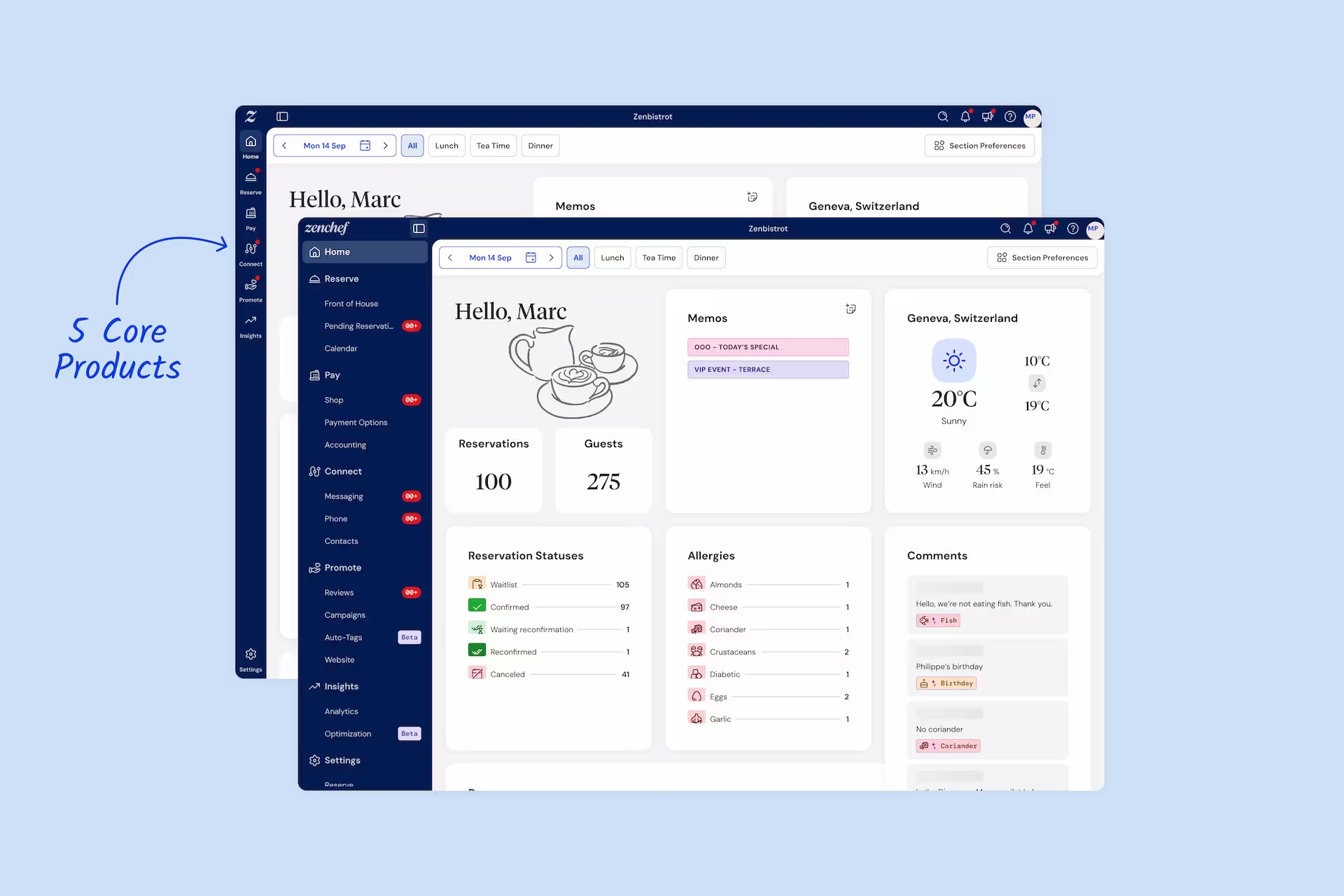
Beyond the basic financial audit, Zenchef is a complete, all-in-one management solution: online visibility, e-reputation management, reservation tools, and guest relationship management — all in one platform.
How to build a financial dashboard for your restaurant
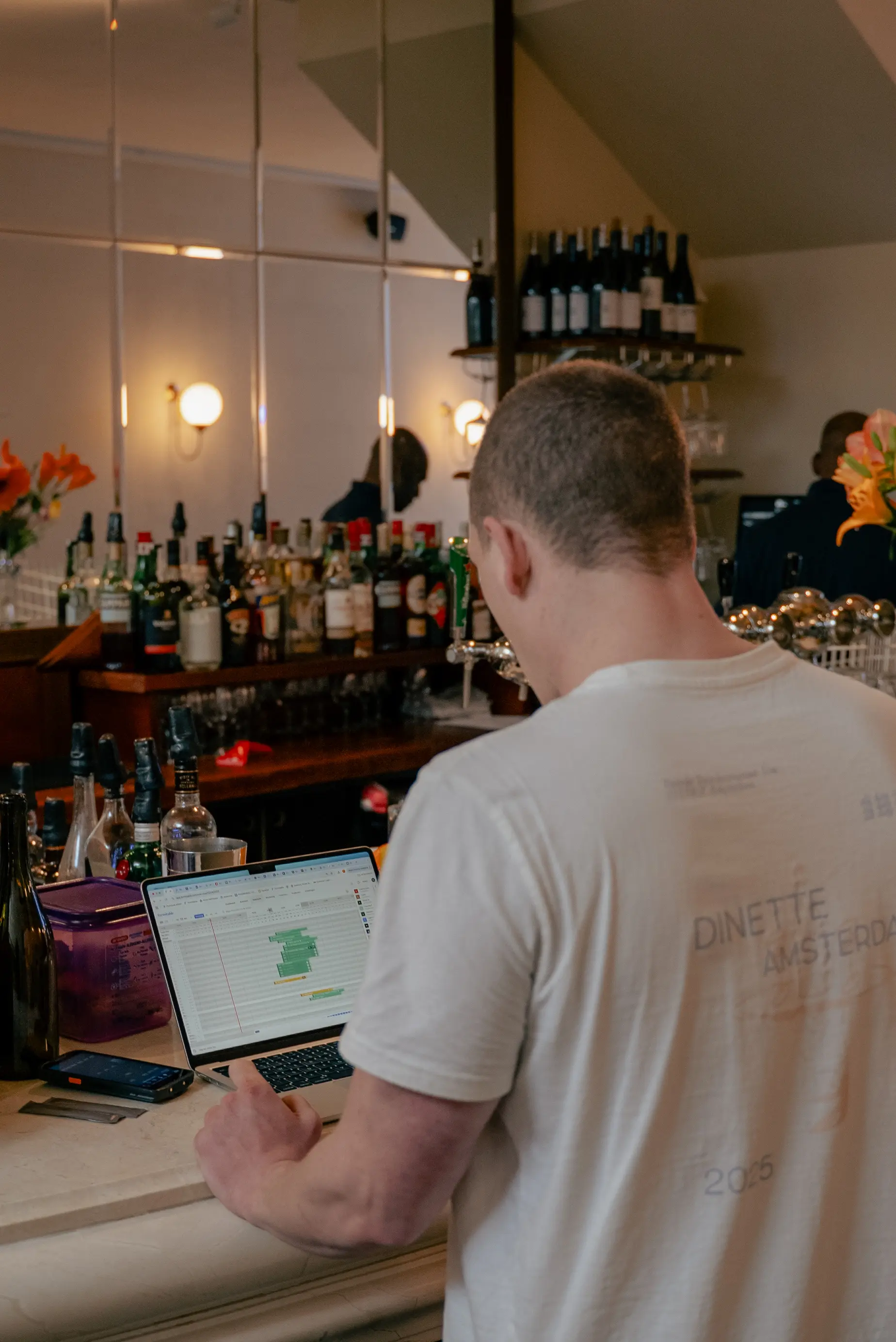
A restaurant dashboard is a document — typically in spreadsheet format — that tracks the profitability of your operation over time. It brings together your key financial ratios alongside other performance indicators to give you a complete picture of the business at any moment.
Why is a dashboard important for your restaurant?
A management dashboard is an essential steering tool in any sector. In hospitality, it lets you verify that the business is heading in the right direction, spot problems early, and make informed decisions — on pricing, staffing, supplier contracts, or promotional strategy.
How to build a restaurant dashboard
- Define clear objectives: monthly revenue target, occupancy rate, guest satisfaction score, and critical thresholds not to be breached.
- Choose the right KPIs (key performance indicators) for your specific operation. These can be financial ratios, qualitative indicators (guest satisfaction, front-of-house and kitchen efficiency), and efficiency indicators (maximising yield, reducing waste):
- Gather your data sources: EPOS system, accounts, HR and payroll schedules, stock and supplier records.
- Choose your dashboard tool: Excel or Google Sheets, Power BI or Tableau, or the built-in reporting modules in your EPOS or accounting software.
- Structure your dashboard: general overview, revenue breakdown, cost analysis, profitability tracking, HR and productivity, alert tables with traffic-light thresholds (red/amber/green).
- Add visualisation charts: line graphs (revenue or cost trends), bar charts (cost category comparisons), gauges (food cost rate or productivity), pie charts (cost breakdown or revenue segments).
- Test and iterate.
- Update regularly: set an update frequency (daily, weekly, monthly), automate where possible (direct data pull from your EPOS or an HR form), and archive older versions for trend analysis.
11 tips for improving your financial profitability
1. Set your dish prices correctly and review your menu
Setting the right selling prices is a fundamental prerequisite for achieving a healthy margin. To price your dishes, take into account:
- The cost of raw materials.
- Establishment overheads (premises, taxes, payroll, energy costs, etc.).
- Competitor pricing.
- Your cuisine type and commercial positioning.
- Your customer profile and average budget.
To set your prices, you can use:
- The Omnes pricing model — a four-principle framework widely used in professional kitchens.
- Setting prices based on your target gross margin — which must cover raw material costs and general overheads.
- The cost-multiplier method — applying a coefficient to the raw material cost to arrive at the per-portion price. The multiplier is typically around 4 for food and can vary from 3 to 10 for drinks.
2. Create recipe specification sheets
Recipe specification sheets are a cornerstone of accurate cost pricing. They bring together all the information relating to a dish: ingredients, quantities, preparation method, presentation, and plating. They give the kitchen team a precise reference point, help control portion sizes, and reduce waste — all of which directly support margin improvement.
3. Keep your menu fresh
Regularly reviewing and evolving your menu is essential for boosting restaurant profitability. Analyse the performance, popularity, and margins of each dish
- Popular and profitable dishes: maximise their visibility by placing them strategically on the menu.
- Popular but low-margin dishes: reduce portions, raise the selling price, or switch suppliers.
- Profitable but unpopular dishes: adapt the recipe or reposition them on the menu.
- Dishes that are neither popular nor profitable: remove them.
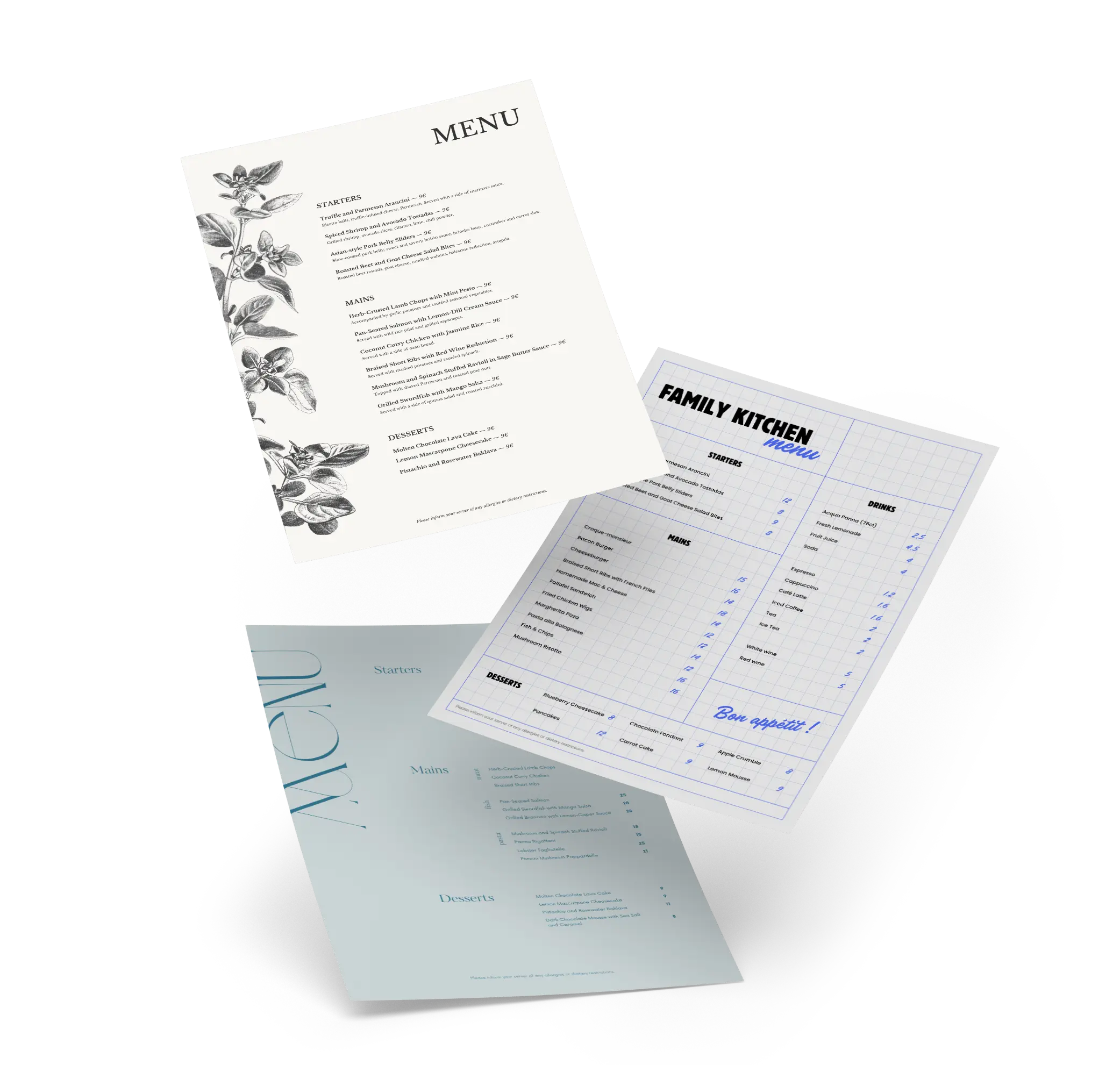
Also think about creating an attractive, clean, and simple menu. A long, dense menu is more expensive to produce, less pleasant to read, and tends to overwhelm guests — often leading to lower-value choices.
4. Manage your stock effectively
Good stock management is fundamental to reducing food waste and breakages, and to optimising restaurant profitability. It requires a structured approach: regular stock counts, clear organisation by product category, FIFO (first in, first out) rotation, and minimum stock thresholds that trigger automatic reordering before supplies run out.
5. Negotiate with your suppliers
Supplier choice can have a significant impact on ingredient costs. Choose your suppliers carefully to ensure a good price-quality ratio, and do not hesitate to negotiate. Joining a purchasing group or buying cooperative can also give you access to better rates through collective bargaining.
6. Manage your cash flow carefully
Excellent financial management is non-negotiable for restaurant profitability. Entrust your accounts to a professional, keep a close eye on your cash flow, and stay on top of your payment terms with both customers and suppliers. A cash flow that dries up — even temporarily — can threaten the survival of an otherwise viable business.
7. Use restaurant management software
In the digital age, a wide range of specialist tools have transformed how restaurants operate:
- Stock management software (e.g. Marketman, BlueCart, Lightspeed Inventory)
- EPOS systems (e.g. Lightspeed, Square, TouchBistro)
- Staff scheduling tools (e.g. Deputy, Planday, Rota Cloud)
- Food hygiene management (e.g. FoodDocs, Jolt, SafeCheck)
- Delivery platforms (Uber Eats, Deliveroo, Just Eat)
- Cash flow management (e.g. Xero, QuickBooks, Sage)
- Online reservation management — with Zenchef, our reservation module integrates directly into your restaurant website.
- Digital menu via QR Code
- QR Code payment at table
At Zenchef, we offer restaurant owners a complete, all-in-one solution for QR Code menus, table-side payments, and more. Discover Zenchef
8. Increase covers with a reservation management system
Did you know that 85% of reservations are made outside of service hours? With a reservation system like Zenchef, guests can book 24/7, directly from your website, Google, or social media — without you or your team needing to be available. Fewer missed reservations means more covers, and more covers means stronger revenue.
9. Nurture your guest relationships and build loyalty
Delivering a quality guest experience is essential for the long-term success of your restaurant. With our restaurant CRM, you can collect guest data, segment your audience, and send personalised campaigns — birthday offers, return visit incentives, exclusive events — to keep your regulars coming back and attract new guests through word of mouth.
10. Strengthen your digital visibility
A well-designed, high-performance website — featuring your menu, address, opening hours, contact details, and professional photos — is now an essential tool for attracting new guests. Complement it with an active presence on Google, TripAdvisor, and Instagram, and manage your online reviews proactively. Positive reviews are free advertising; a quick, professional response to negative ones shows potential guests that you take hospitality seriously.
11. Invest in staff training
In the UK, organisations such as Acas and the Hospitality Sector Council offer resources to help hospitality businesses develop their workforce and improve staff retention. Investing in your team’s skills pays dividends across every ratio — from productivity to guest satisfaction.
Whether it is sales training for front-of-house staff, language skills for venues near tourist attractions, or culinary upskilling for kitchen teams, a well-trained team consistently outperforms one that has been left to figure things out alone.
Want to see how Zenchef can help your restaurant grow? Request a free demo here.