
The Allergen Chart: A Legal Requirement in Food Service
Given the risks and dangers associated with the presence of allergens in dishes, their display is mandatory in a restaurant, just as it is for restaurant licensing, alcohol sales regulations, and no-smoking notices. Since 1 January 2014, when the Food Information Regulations 2014 came into force, restaurant owners must inform customers of the presence of allergenic substances in all menu items. The information must be written, visible and legible to consumers.
The allergen list should be presented in table format and updated whenever you change your dishes or ingredients. As a restaurant owner, you can choose to display a summary table of different allergens (specifying which dishes contain them), or display at minimum a notice informing customers the allergen table is available on request.
Which Allergens Must You Display in Your Restaurant?
Here is the list of 14 allergens you must display in your restaurant under UK food safety regulations:
- Cereals containing gluten (wheat, rye, barley, oats, spelt, etc.)
- Crustaceans and crustacean-based products
- Eggs and egg-based products
- Peanuts and peanut-based products
- Fish and fish-based products
- Soya and soya-based products
- Milk and dairy products or milk-based products
- Tree nuts (almonds, walnuts, hazelnuts, cashews, pecans, etc.)
- Celery
- Mustard
- Sesame seeds
- Molluscs
- Sulphur dioxide and sulphites
- Lupin
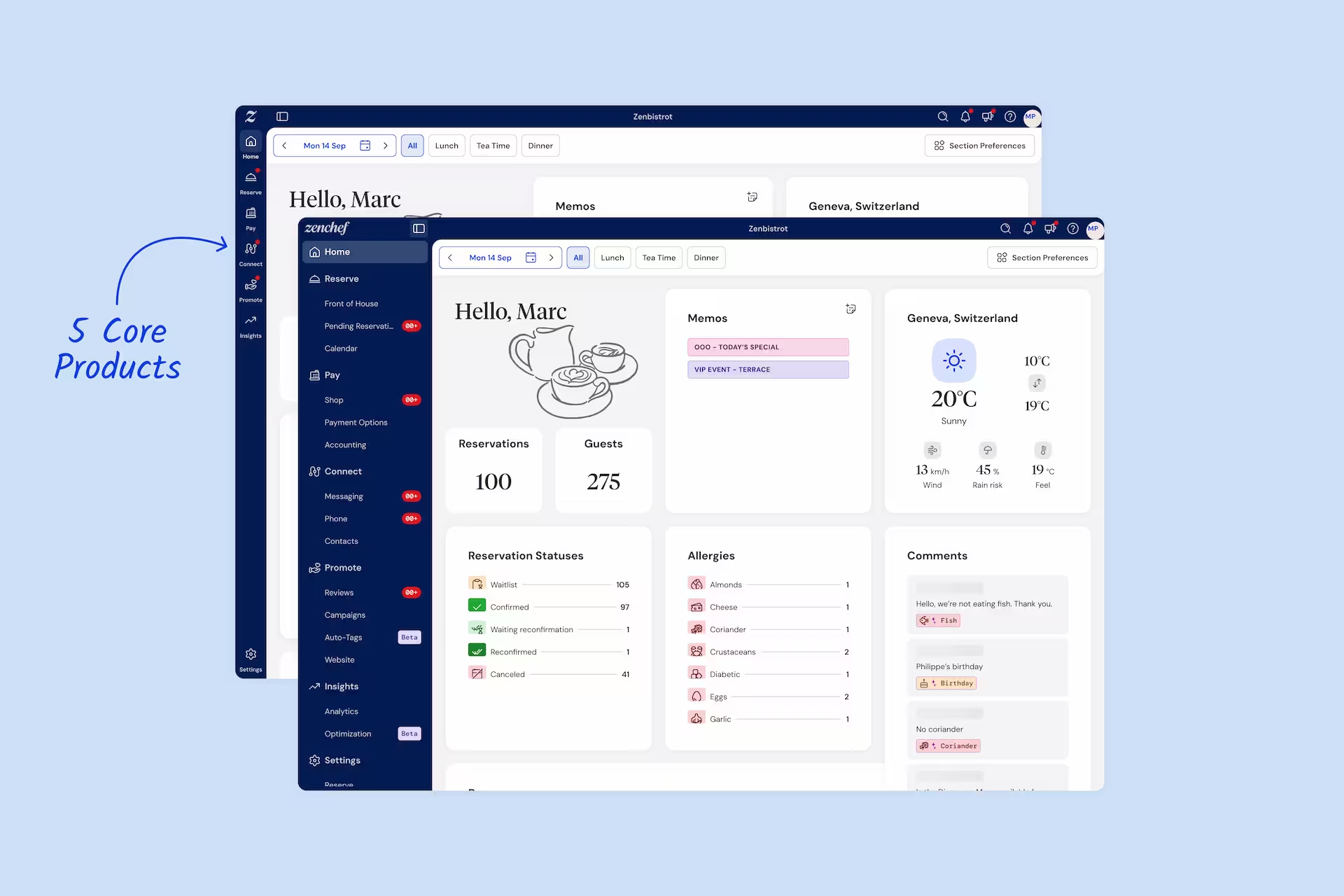
Creating a QR code menu with Zenchef allows you to automate allergen display for each dish. Similarly, within customer personalisation, you can add allergies and dietary restrictions to your customer profiles.
How to Inform Your Customers of Allergens
Here are the different options available to you to inform your customers of allergens in your menu dishes:
Display Allergens on Your Restaurant Website
One option is to inform your customers of allergen presence via your restaurant website. However, this approach has limited accessibility. If you choose this method, you must also display a notice in your establishment indicating that customers can view the allergen table online.
Display the Allergen Table on a Digital Menu
A digital menu via QR code is a very useful solution that allows you to offer an excellent customer experience whilst also increasing table turnover rates. On this online menu, you can add an allergen table that customers can easily access from their smartphone. Plus, you can update the allergen table whenever you need to, directly online.
Display Allergens on a Wall-Mounted Notice
Another straightforward solution is to display the allergen table on a card posted on your restaurant walls. This display method has the advantage of being visible and accessible to everyone.
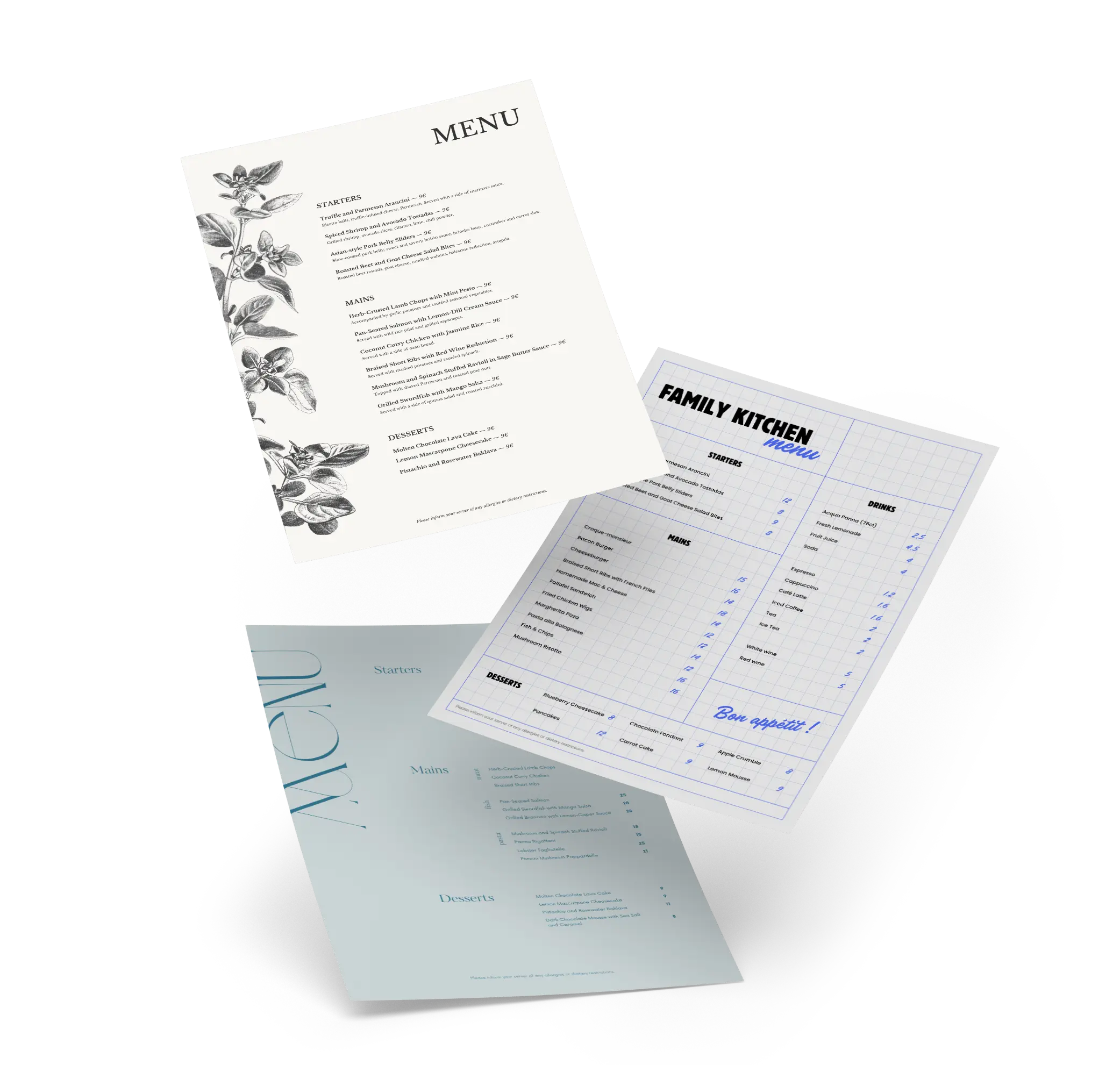
Display Allergens on Your Restaurant Menu
A final option is to display the allergen table on your restaurant menu on a separate sheet at the end of your menu or next to each dish. However, this approach can become tedious and expensive because you'll need to print a new menu or sheet each time you change a dish or an ingredient containing an allergenic substance.
Display a Notice That the Allergen Table Is Available
To simplify allergen table display, UK food safety law allows restaurants to display only a notice stating that the allergen table is available upon request from your staff, or at the till, for example.
Good to know: Establishments offering pre-packaged products (for example, catering services, deli counters, etc.) must display the allergens of the product on the packaging itself.
Penalties for Failing to Display Your Allergen Chart
As a restaurant owner, you are responsible for ensuring food safety and consumer protection. It is therefore crucial to take the allergen display requirement seriously. Under the Food Safety Act 1990, failure to display allergen information can result in prosecution and significant fines, as well as potential closure of your establishment in serious cases. The Food Standards Agency (FSA) provides detailed guidance on compliance requirements.
Mandatory Allergen Display Table
All 14 allergens listed below require mandatory display in your restaurant:
- Cereals containing gluten (wheat, rye, barley, oats, spelt, kamut or their hybrid strains)
- Crustaceans and crustacean-based products
- Eggs and egg-based products
- Peanuts and peanut-based products
- Fish and fish-based products
- Soya and soya-based products
- Milk and dairy products (including lactose)
- Tree nuts (almonds, hazelnuts, walnuts, cashews, pecans, macadamia, Brazil, Queensland, pistachios)
- Celery and celery-based products
- Mustard and mustard-based products
- Sesame seeds and sesame seed products
- Sulphur dioxide and sulphites at concentrations exceeding 10 mg/kg or 10 mg/l
- Lupin and lupin-based products
- Molluscs and mollusc-based products
Food Allergies in the UK: Statistics
In the UK, approximately 2 million people (3% of the adult population) have a diagnosed food allergy. Among children under 15, between 6% and 8% are affected by food allergies, representing a significant increase over the past two decades. According to UKHospitality, severe allergic reactions in food service settings have become increasingly common, with proper allergen management now a critical operational requirement for all venues.
Symptoms of food allergies can range from mild cutaneous reactions (itching, hives) to severe respiratory distress and anaphylaxis, which can be life-threatening. The most common severe reactions are triggered by tree nuts, peanuts, gluten-containing cereals, shellfish and cow's milk. Approximately 10% of anaphylactic reactions occur in school settings. For nearly half of these cases, it is the first manifestation of a previously unknown allergy, making awareness and proper food handling crucial for all food service providers.
The Food Standards Agency (FSA) emphasises that restaurants have a legal and ethical responsibility to manage allergens safely and transparently.
For additional guidance on menu management, read our article on how to be a good restaurant manager. You may also find our guide on restaurant service optimisation helpful, as well as tips on how to create your restaurant menu online for free.